Picking UPH is only part of the efficiency picture
Units per hour, or UPH, is one of the most quoted efficiency numbers in online grocery, and one of the most frequently misunderstood. Not because the idea is hard to grasp, but more because different operations define it in different ways.
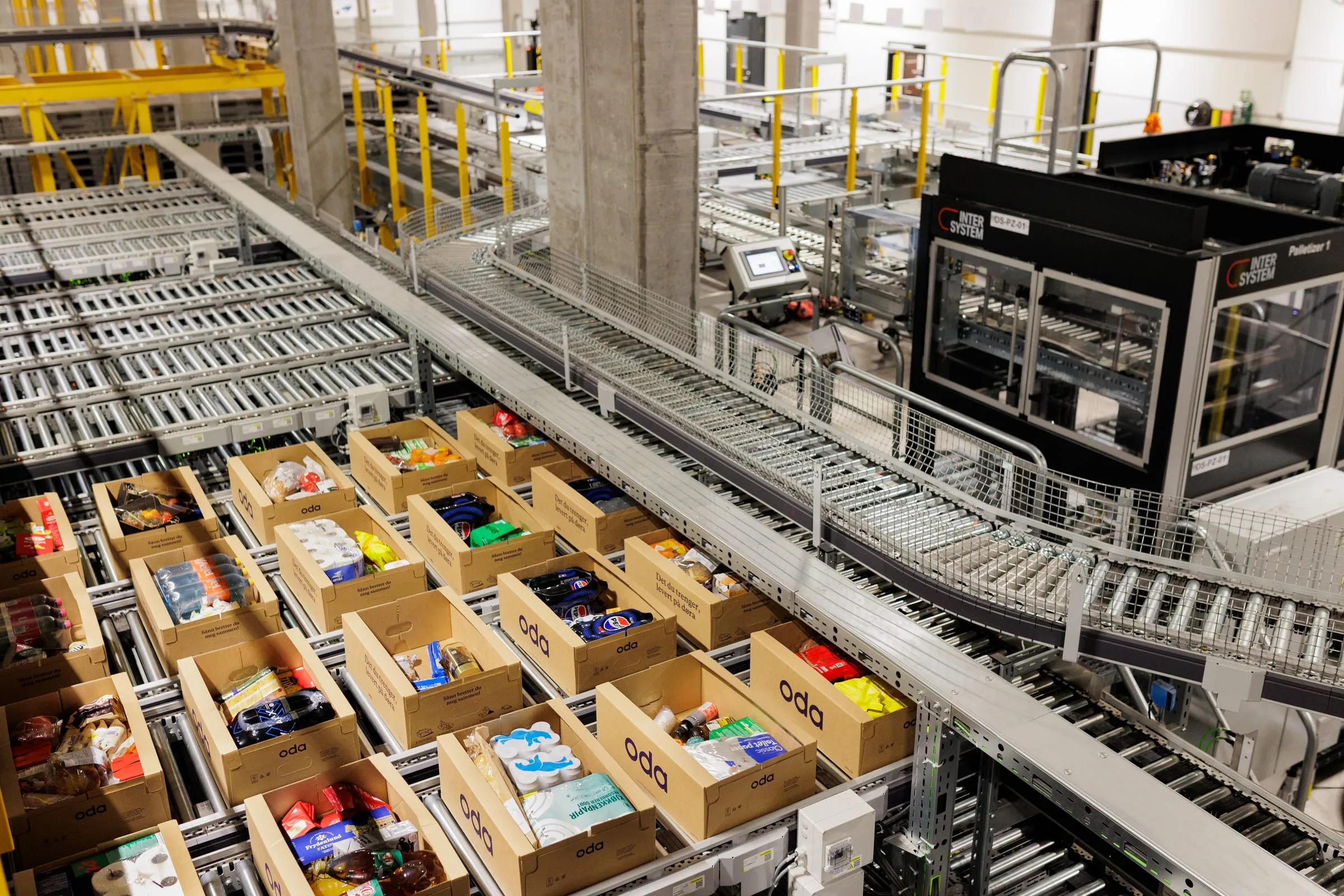
In most cases, UPH refers to picking, or more precisely units picked per labor hour: how many items are picked for every hour of work spent picking. It’s easy to read “per hour” as a measure of speed, but it isn’t. Rather, it tells you how much output each hour of labor produces. It’s widely used and, once everyone agrees it means units per labor hour, easy to measure. That makes it a good place to start. It also makes a fair benchmark across markets. Food prices and hourly wages differ from country to country, which makes cost per pick hard to compare, but an hour is always an hour.
Picking gets a lot of attention partly because many automation vendors, such as automated storage and retrieval systems (ASRS), only cover that step, so picking UPH is the figure they quote. That’s useful, but it can hide the bigger picture of overall efficiency. Picking is only one step in getting a grocery order ready for delivery. Before an item can be picked, someone has to receive it, sort it, and put it on the shelf. After it’s picked, the order has to be sorted by route and moved to the dispatch gates.
A picking UPH figure tells you how efficiently one step runs, but it doesn’t tell you how many people the whole operation needs. If you’re comparing fulfillment options or building a business case, the number of people needed might be the figure that matters more.
What picking UPH leaves out
The work around picking is where operations differ most, and where numbers stop being comparable:
- Receiving and replenishing. Every inbound item has to arrive, be sorted, and reach the right shelf before anyone can pick it.
- Sorting, grouping by route, and moving orders to the dispatch gates. Once orders are picked, they need to be sorted by route and transported to the dispatch gates, ready for loading at the right time.
- Levels of automation. Even within picking, automation often covers only part of the work. A quoted picking UPH might reflect only the items picked from an automated system, while another temperature zone is picked by hand. This is common in micro-fulfillment centers, where part of each order comes from the automated grid and the rest is picked manually in the store. Even at Oda, frozen products are picked manually. It’s worth asking whether a figure covers all picking, or only the automated part.
- Quieter days. When volumes dip, some operations keep everyone on the picking roster, which pulls their picking UPH down: the same number of items is spread over more labor hours, even though nobody is working any slower. Others move people to restocking and other tasks, so picking UPH reflects actual picking. Both approaches are reasonable, but the figures they produce aren’t like for like.
You might expect an all-in UPH figure to solve this, but in practice, there’s no agreed definition. One operation might include everyone down to the cleaners where another leaves out team leaders counting them into fixed costs instead. That’s why we find it more useful to talk about something everyone counts the same way: people.
From items to people
If you tend to think more in full-time equivalents (FTEs) than in units per hour, you might be curious how to get from one figure to the other. It only takes a few simple steps.
Let’s say you handle 12,500 orders a day. With an average basket of 40 items, that’s 500,000 items. If picking runs at 600 units per labor hour, it takes about 833 hours a day. On 7.5-hour shifts, that’s roughly 111 people.
But that’s just your picking team, not your fulfillment team. Add receiving, restocking, and sorting and transport to the dispatch gates, and the number of people it takes to get those 12,500 orders ready for loading will be considerably higher. Two operations with the same picking UPH can require very different headcounts.
It’s also an easy mistake to read a high UPH number as a sign of a big team. In fact, it means the exact opposite. UPH is a rate of efficiency, not a volume. Volume and headcount have to rise together to hold UPH steady. If you add people without adding volume, UPH falls. A higher UPH means the same volume needs fewer people.
Units, orders and basket size
Let’s look at three more numbers that often get mixed up in these conversations.
- Units are the individual items handled, and they drive labor hours.
- Orders drive capacity: delivery slots, vehicles and dispatch.
- Basket size links the two, yet it’s rarely calibrated. The same 500,000 items a day means 12,500 orders at 40 items per basket, or 25,000 orders at 20.
Five questions to ask about any UPH figure
- Which steps are included? Picking only, or everything from receiving to dispatch gates?
- Who is counted? Only people in operational processes, or also admin, maintenance and cleaning roles?
- How are quieter days handled? Does everyone stay on the picking roster, or move to other tasks?
- Is it a peak or an average? Picking UPH can vary widely between an experienced operator and a new one, and from one volume day to the next. A figure from a single station, shift or record day says less than a sustained average. At Oda, we usually report UPH over a full week, across all fulfillment processes.
- How many FTEs does it take at your volume, for every step of the process? This is often the most useful question of all.
When we describe our own operations in Norway and Sweden, we lead with numbers like these: how many items we handle each week, how many FTEs it takes, and our variable fulfillment cost as a share of sales. They’re easier to check, and harder to misread, than any single rate.
Seeing the whole picture
Picking UPH is still a valuable metric. Measured the same way week after week, it’s one of the clearest signals of whether your picking process efficiency is improving.
Where it falls short is as a stand-in for the whole operation. Pairing it with the number of people it takes to fulfill your volume, from receiving to the dispatch gates, gives everyone the same picture, whether they work on the warehouse floor or in the office.
If you’d like to see what your own volumes look like in people and hours, we’re always happy to run the numbers together.