Your store wasn’t built to be a warehouse
Picking online grocery orders in store is a sensible way to start, but as your online offering grows, your stores end up serving two sets of customers at once, which can negatively impact the experience for both.
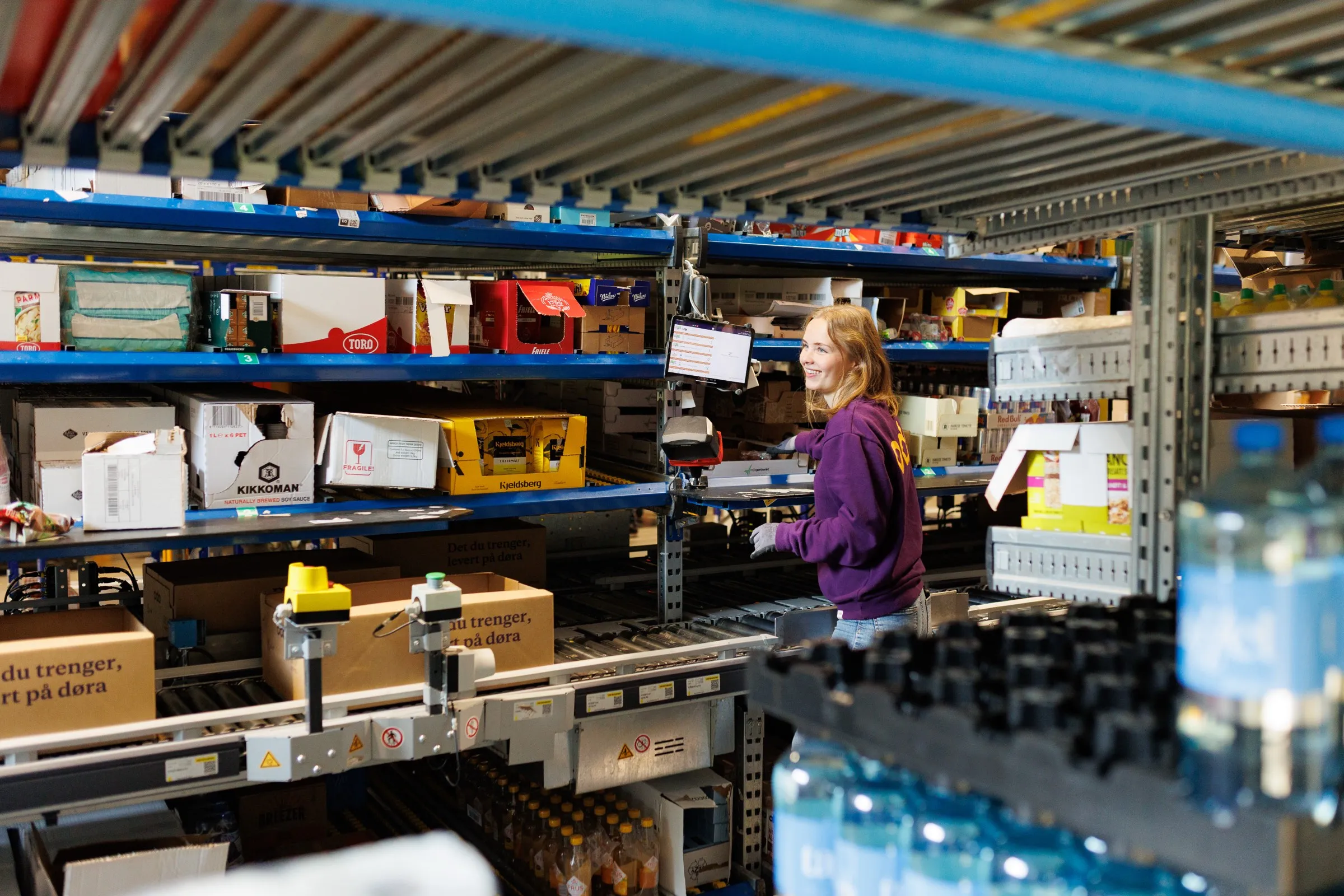
A recent story in The Grocer will have made plenty of people in our industry wince. Staff at one of the UK’s biggest grocers described what happens when rapid delivery orders arrive every few minutes, each averaging more than 30 items, and the only place to pick them is the shop floor. Colleagues get pulled off the checkouts, shelves don’t get refilled and breaks get skipped, and one shopper said there were now more pickers in the aisles than customers.
While this is a story of one retailer’s growing pains, it’s a pattern many grocers who pick online orders in store may begin to recognize too late. McKinsey has put a number on the upper limit, finding that manual store-based fulfillment tends to hit a hard ceiling at around 12 to 15 percent online penetration . But that’s where the model physically runs out of room, not where the problems start. Your loyal in-store customers will notice the crowded aisles and empty shelves long before you get there, so being below that ceiling isn’t a reason to wait.
Two sets of customers, one shop floor
Picking in store is a sensible place to start with your online offering, given there’s no new building to fund and you can be up and running quickly. The trouble is that most established supermarkets are designed for people to come in and browse, but as online volume grows, the store ends up serving two sets of customers at once: the shoppers walking its aisles in person, and the staff walking those same aisles on behalf of customers who ordered from home. As Matthias Schu pointed out in his post on the story, when a shop has to be both a sales floor and a dark store, online pickers and in-store customers end up competing for the same aisles, the same shelves, and the same staff.
Fresh produce shows this especially clearly. In a store, shoppers already pick up, sort and squeeze fruit and vegetables, and each of those small actions shortens shelf life . Pickers can only take what’s on those same shelves, so online shoppers, who should be able to expect better, end up with produce that’s already been handled and miss out on one of the biggest advantages online grocery can offer: fresh produce that has gone almost straight from supplier to doorstep, with fewer hands and handovers along the way. Availability suffers too: because there’s a gap between when an order is placed and when it’s picked, in-store shoppers keep buying from the same shelves in the meantime, so items that showed as available online may be gone by the time the picker gets there, leaving online customers with substitutions or missing items.
Which shopping job are you building for?
It helps to go back to basics and ask what your customers are trying to get done, because the same household shops in more than one way. Quick commerce gets a lot of attention, and NielsenIQ’s research on the UK market found that it’s mostly driven by snacking, top-up shopping and “meal for tonight” needs, with a typical range of around 2,000 products. Those are real needs and worth serving, but the same customer is doing a very different job when planning the weekly shop: they think ahead and consolidate into larger orders and expect a proper supermarket range, from fresh and chilled to frozen.
So before deciding what comes next, it’s worth asking which of these jobs your fulfillment is really built around today, and whether that’s the one you most want to win.
The tempting middle ground
When in-store picking reaches its limit, the next suggestion is often a micro-fulfillment center (MFC), which is a compact automated unit in or beside the existing store that promises relief without the commitment of a large warehouse. It’s easy to see the appeal: more capacity, and the chance to share the store’s stock, staff and space rather than building something new. But that idea of leveraging the store is also where the problems start. Interact Analysis describes one grocer whose MFC was rated at 600 picks an hour but managed only around 250 across the whole operation once manual picking from the store was added in.
Because an MFC draws on the same inventory as the store, the availability problems don’t go away, and because part of each order is often still picked from store shelves, there are still pickers in the aisles alongside your shoppers. Additionally, each unit can also only serve the neighborhood around its store, so it buys some breathing room rather than the kind of capacity that helps you win a bigger share of the market. Getting to that point with an MFC strategy means building a lot of them, each with its own stock, staff and maintenance to manage.
None of this means the answer is a huge automated warehouse. Grocers are right to be wary of the investment and complexity of a large CFC that needs massive volumes to pay off, but there is a middle path that gives you central capacity and control without taking on that risk.
Watch the threshold, not just the ceiling
Picking in store, whether by your own team or a delivery-app partner, is likely to stay part of the mix, and for top-up orders and meeting quick-commerce demand, it’s often the right tool. The goal isn’t to stop doing it, but to notice when your stores start carrying more than they were built for. The visible signs, like colleagues pulled off the checkouts, crowded aisles and teams asking for limits on order size, tend to show up once the strain is already there. The earlier signals are in your numbers: picking taking up a growing share of store labor hours, pick rates slowing during busy trading hours, substitutions and missing items creeping up on online orders, and gaps on the shelves at the times of day when pickers are busiest. Keeping an eye on these gives you time to plan your next step rather than react to it.
When those numbers start to move, it’s time to look at moving some of the picking out of the store. The aim isn’t to turn in-store shoppers into online ones, but to serve both better: room in the aisles for the people who want to be there, less congestion around the shelves, and large, weekly-shop online orders picked somewhere built for them, with fresher produce and fewer substitutions.
If you’re starting to see these signs in your own stores, or would like to get ahead of them, we’d be glad to talk it through. We’ve spent more than a decade running online grocery ourselves, and we’re always happy to share what we’ve learned and explore what could work for your operation. Send us a message to start the conversation.